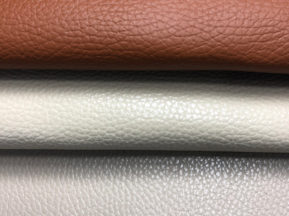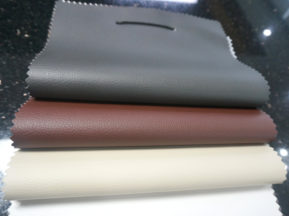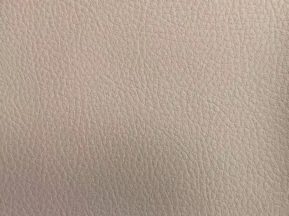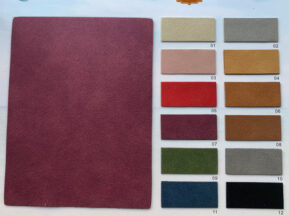

A revolution in “safety and touch” in the skies: How silicone leather meets FAR 25.853 standards and empowers aircraft seats.
In the modern aviation industry, the choice of cabin interior materials not only affects passenger comfort but also directly impacts safety. With the rapid development of materials science, a new type of environmentally friendly fabric— silicone leather —is gradually emerging in the field of aircraft seat manufacturing. It has not only successfully passed the stringent aviation flame-retardant standard FAR 25.853 but also brought revolutionary performance improvements to aircraft seat design.
I. The “hard indicator” of aviation safety: meeting the FAR 25.853 flame retardant standard
An aircraft is a relatively enclosed high-altitude environment, so there are almost stringent requirements for the fire resistance and flame retardancy of all non-metallic materials in the cabin (especially seat fabrics, carpets, curtains, etc.).
-
What is FAR 25.853?
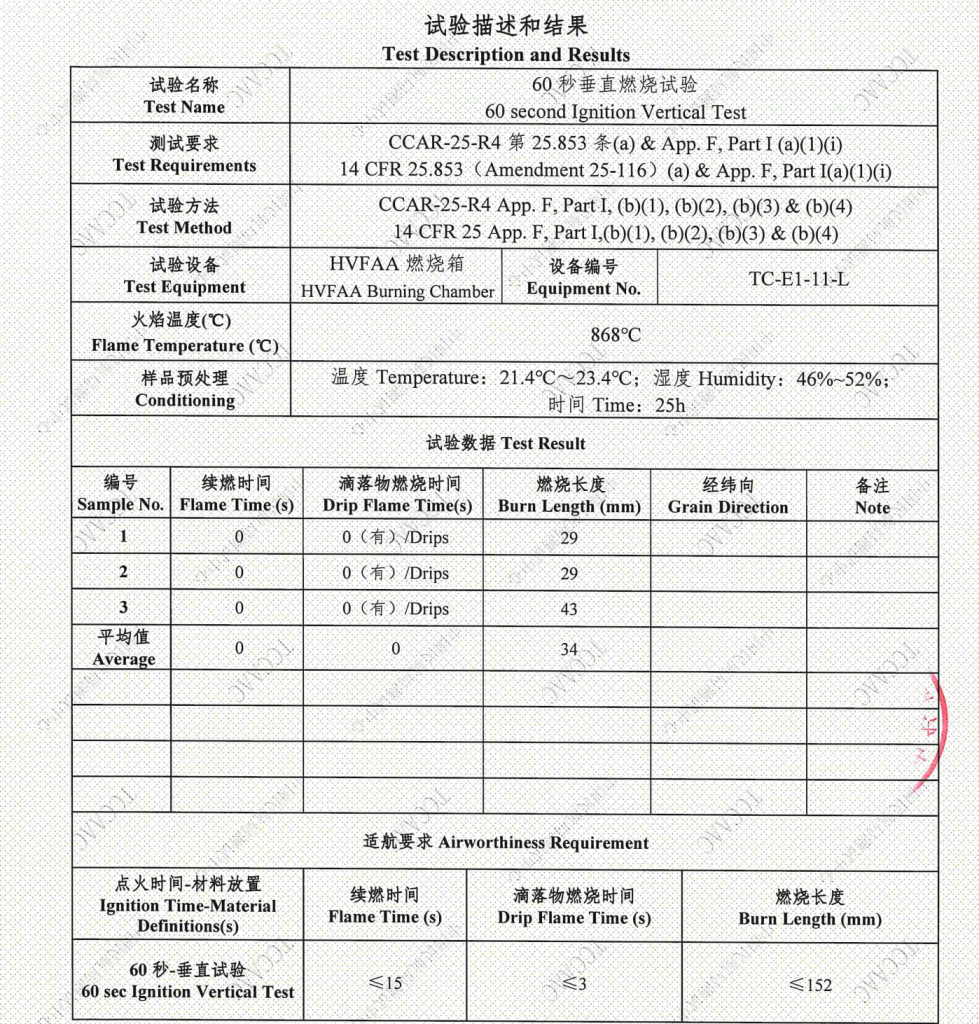
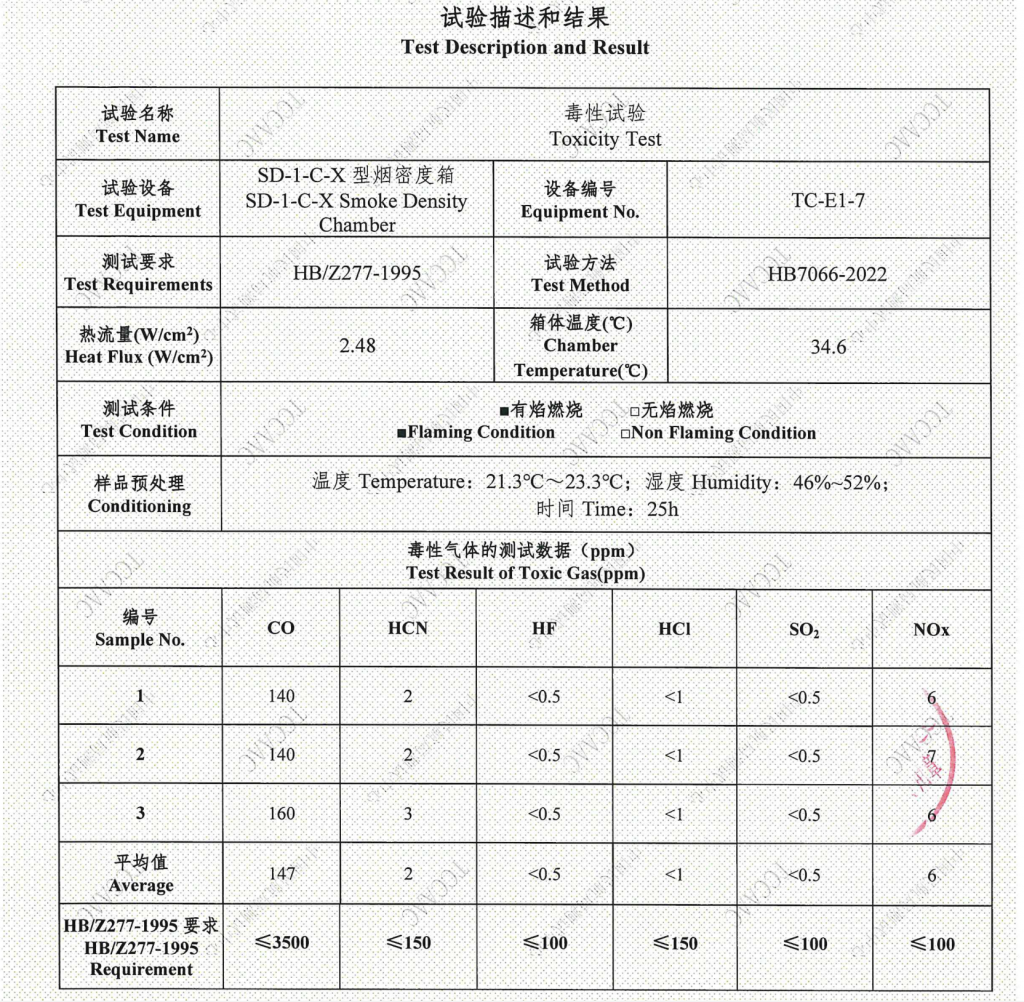
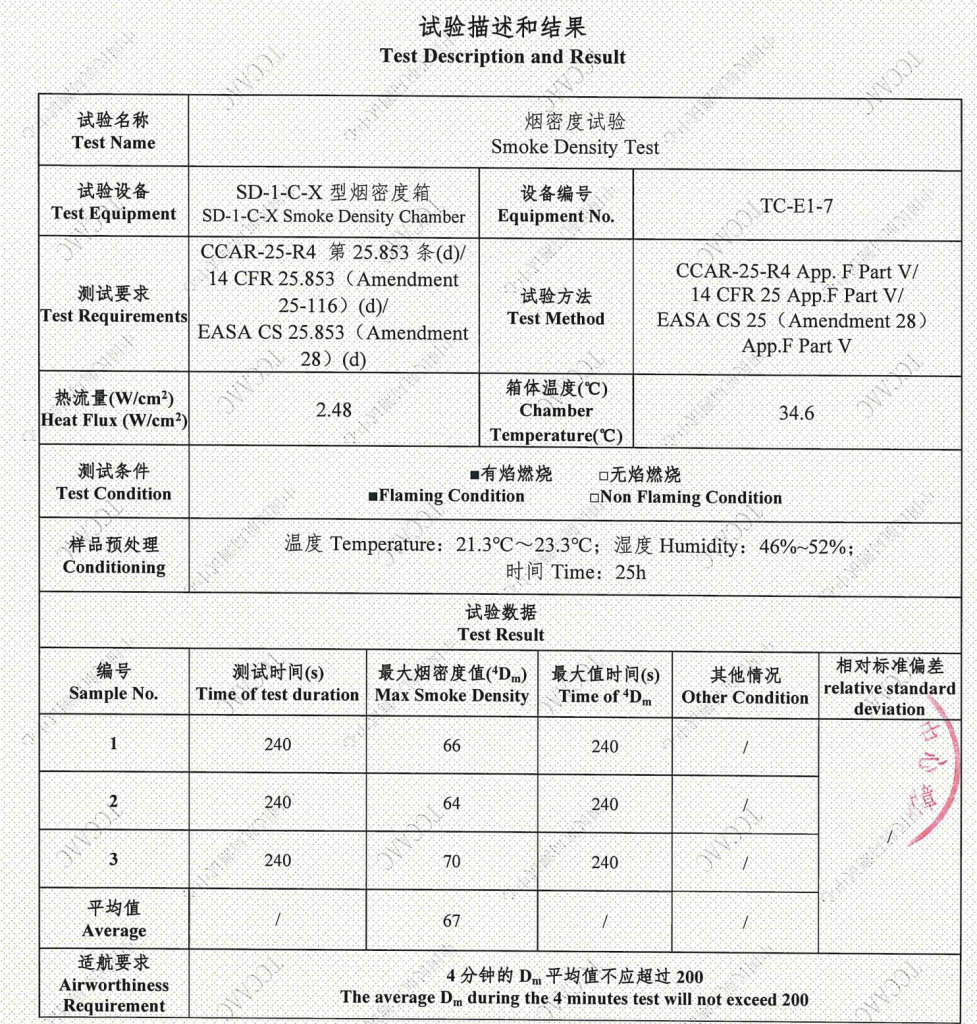
FAR 25.853 is the core standard of the U.S. Federal Aviation Administration (FAA) for testing the flammability of cabin interior materials in the airworthiness regulations for transport category aircraft . This standard rigorously tests the materials’ flame retardancy, burn-through resistance, smoke density, and ability to release toxic gases by simulating fire scenarios. The following is a test report from the Civil Aviation Administration of China (CAAC).
-
How is silicone leather made?
Silicone (polysiloxane) is essentially an inorganic polymer material. Its molecular structure contains strong silicon-oxygen bonds (Si-O). These chemical bonds have extremely high bond energy, which gives silicone its natural flame-retardant properties.
-
Extremely low smoke density and toxicity: When burned in an open flame, traditional leather or PVC/PU artificial leather often produces a large amount of black smoke and toxic gases (such as cyanide, carbon monoxide, etc.), while silicone leather only decomposes to produce a small amount of silicon dioxide and harmless gases when heated, producing almost no dense smoke and containing no toxic halogens .
-
Excellent self-extinguishing properties: Silicone leather can quickly and automatically extinguish itself after being removed from the fire source, without smoldering or continuing to spread, perfectly meeting the stringent requirements of FAR 25.853 for vertical burning, 12-second/60-second burning tests, etc.
-
II. Superior Performance: The Core Advantages of Silicone Leather for Aircraft Seats
In addition to meeting critical safety standards, silicone leather also demonstrates unparalleled advantages in physical properties and passenger experience compared to traditional aviation materials (such as genuine leather, PU leather, and fabrics):
1. Ultimate in environmental protection and health (non-toxic and odorless)
Traditional aerospace-grade synthetic leather may release VOCs (volatile organic compounds) during production or use, often contributing to the unpleasant odors in new aircraft cabins. Silicone leather, made from silicone, is free of plasticizers (such as phthalates), heavy metals, PVC, and organic solvents . It is not only non-toxic and odorless but also possesses medical-grade skin-friendly properties, making it extremely suitable for infants, pregnant women, and allergy sufferers, fundamentally improving cabin air quality.
2. Superior weather resistance and anti-aging capabilities (long lifespan)
High-altitude flight means that aircraft are constantly exposed to strong ultraviolet radiation and drastic temperature changes (alternating between low temperatures at 10,000 meters altitude and high temperatures on the ground).
-
UV resistant: The silicone molecular structure is extremely stable and will not fade, yellow, powder, or crack even after prolonged exposure to sunlight .
-
High and low temperature resistance: It can maintain its softness, elasticity and physical properties in extreme temperature ranges, which greatly extends the service life of aircraft seats and reduces the maintenance and replacement costs for airlines.
3. Top-notch stain resistance and extremely easy to clean.
The cabin seats receive different passengers frequently every day, so it is inevitable that they will get stained with coffee, beverages, oil stains, ink, and other dirt.
-
Silicone leather surfaces have naturally low surface energy (anti-sticking properties) and possess extremely strong hydrophobic and oleophobic properties.
-
Most common stains can be removed by gently wiping with a damp cloth and water. You can even use medical alcohol or aerospace-grade strong disinfectant for daily disinfection without damaging the leather surface.
4. Ultimate skin-friendly feel and ergonomic comfort
Seat comfort directly impacts the experience of long-haul flights. Silicone leather offers a unique silky feel, being both soft and resilient.
-
Breathable and dry: Its microstructure has good breathability and moisture permeability, making it less prone to sweat accumulation and preventing stuffiness even after sitting for a long time.
-
Temperature regulation: It has a good ability to regulate heat conduction, so it is not cold in winter or icy in summer, and always matches the body temperature.
III. Summary
As the global aviation industry pursues both “green flight” and “ultimate safety,” traditional aviation interior materials are undergoing rapid iteration. Silicone leather, with its robust safety features including perfect compliance with the FAR 25.853 flame retardant standard, and its comprehensive advantages in environmental friendliness, durability, ease of cleaning, and comfort , is becoming the rising star of high-end aviation seat fabrics. It not only brings airlines higher operational economics but also provides every passenger with a safer, healthier, and more comfortable journey in the air.